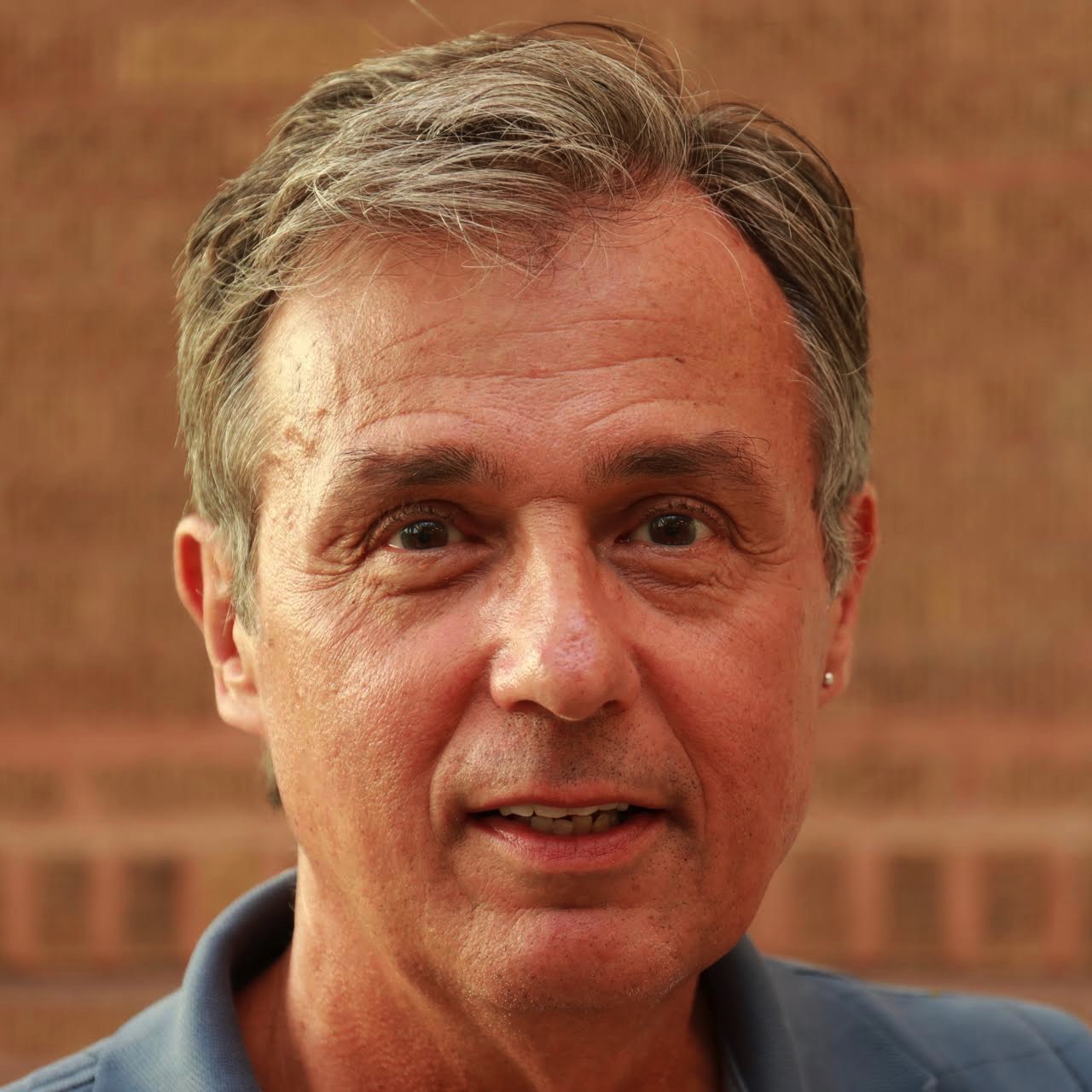
Nobel laureate and holocaust survivor, Elie Wiesel, once wrote, “God loves stories so he created people.” Wiesel was keenly aware that each person’s story is unique, sacred and significant. Our stories are unique because each life is different from everyone else’s. They are sacred because God creates each life and offers it to us and to the world as a gift. And they are significant because each of us has the opportunity to partner with our Creator as cocreators in our life’s drama.
The narrative of my story is now in its seventh decade. God is an integral part of my story and every story. That is true whether we embrace, ignore or resist His active presence. Yet, remarkably He continues to invite us to participate in the unfolding drama, even when we resist. And though my narrative is incomplete and still being written, I want to share it now – not because I completely understand its significance but rather in the hope of better understanding it. I don’t share my story because I believe it to be more important than anyone else’s story. It is neither more important nor less. I simply tell it because I know my story better than any other. As a Chicago Tribune newspaper ad for the obituaries recently reminded me, “Everyone’s story deserves to be told.”
My hope is that putting these reflections on paper will enable me to gain greater insight into my own narrative. So this memoir is for me, as much as or more than for anyone else. Yet, I would be delighted if the telling of my story helps someone gain greater insight to their own story.
As I reflect on my life, some events seem random and unrelated, much like trying to make sense of the kaleidoscope of images while channel surfing on a television set. No amount of careful exegesis seems to unravel the cascading events. At other times the narrative seems to have been scripted, much like reading a Dickens novel. Our lives are indeed wrapped in mystery. Nevertheless some mysteries can be at least partially understood. And as I consider some of the incomprehensible parts of my story, I am discovering opportunities for something far more important than understanding. Trust. Trust in the One who gave me life. During the moments I am able to trust, I become increasingly aware that my story is a simply a bit part in a much larger narrative.
At times, I’ve asked myself, “Why do I recall one event and not others?” or “How is it that I can remember something so differently from the way someone else recalls the same event?” We approach our stories from a unique perspective, our own.
Because my story intersects with the story of others, keep in mind that none of what follows is intended to be a judgment upon others. The only parts of another person’s story I know are the parts that intersect directly with mine. Consequently, I’m unable to know what motivates others or what influences them. I am simply telling one story, my own. So as you read remember, “no board is so thin that it doesn’t have two sides.”
Some parts of my story are difficult to share because my family of origin has had some “secrets.” Yet, some secrets need to be revealed because as my friends who have been through Alcoholics Anonymous remind me, “We are as sick as our secrets.” Author Frederick Buechner called part three of his autobiography, Telling Secrets because in it he revealed some family secrets of his own. He comments,
I have called the third and most recent memoir Telling Secrets because I have come to believe that by and large the human family all has the same secrets, which are both very telling and very important to tell. They are telling in the sense that they tell what is perhaps the central paradox of our condition -that what we hunger for perhaps more than anything else is to be known in our full humanness, and yet that is often just what we also fear more than anything else. It is important to tell at least from time to time the secret of who we truly and fully are -even if we tell it only to ourselves -because otherwise we run the risk of losing track of who we truly are and little by little come to accept instead the highly edited version which we put forth in hope that the world will find it more acceptable than the real thing. It is important to tell our secrets too because it makes it easier that way to see where we have been and where we are going. It also makes it easier for other people to tell us a secret or two of their own, and exchanges like that have a lot to do with what being a family is all about and what being human is all about. Finally, I suspect that it is by entering that deep place inside us where our secrets are kept that we come perhaps closer than we do anywhere else to the One who, whether we realize it or not, is of all our secrets the most telling and the most precious to tell.
With that as prelude, let’s begin:
I was born on November 21st 1951. Yet my story begins long before that date in the stories of family members that preceded me. More of that in a bit. In one sense my story does begin on the day I entered the world via Sioux City, Iowa, born to Gus and Frances Shereos. My sister, Vicki arrived three and a half years earlier on July 10th, 1948. Another child was born to my parents between my sister and me. Helen lived only a short time, dying from encephalitis weeks after her birth. Her very brief story was seldom mentioned in our family. Perhaps the silence was because my parents didn’t want to expose Vicki and me to the pain of this family tragedy. It was not until after my mother died that I discovered that Helen was born on my mom’s birthday. Little did I know when my mother was alive, every one of her birthdays was a painful reminder of her deceased daughter. I wish this secret would have been revealed years earlier. I don’t know if that would have lessened the pain but somehow I believe it would have helped my mother and perhaps brought us closer as a family.
I’m told that shortly after Helen’s death a Greek Orthodox priest told my dad that his daughter Helen died because “the sins of the fathers are visited on their children.” His ill-fated comment was not only theologically mistaken but no doubt made a very painful event even worse. Helen’s brief story is a reminder to me of many untold family tragedies. It illustrates difficulty in handling misfortune and a tendency many of us have to bury the pain of the past.
Our family moved from Sioux City, Iowa to Chicago when I was just three years old. As a result, I have only one childhood memory of Sioux City. I recall passing through a green screen door into my dad’s shoe repair shop. It was an old rickety wooden door that squealed when it opened and closed. Upon passing through the door, one encountered a few chairs set on an elevated platform just to the right. When I sat on any one of those chairs, my legs dangled, unable to reach the iron footrest that arose from below. An imposing green counter stood opposite the chairs, standing guard over the long line of motors and pulleys behind it. Whenever I enter one of the few “shoe repair shops” that still remain, the smell of leather immediately triggers the memory of my dad’s shoe shop.
Our family home was in a depressed area of Sioux City. While exploring that city’s history I came across this description of the “South Bottoms,” the neighborhood where our family lived.
Despite regular flooding by the Floyd and Missouri Rivers, the South Bottoms was home to many poor working families. Many immigrants, including Bohemian, Irish, Scandinavian, and Mexican families made their homes in the area along with Native Americans and African Americans. Most did not have transportation and lived close to the factories and packing plants where they worked.
During our time in Sioux City, our family survived three of the severe floods mentioned above. In the few photos that I posses from that era, I noticed that our front porch was adorned with broken balusters surrounded by overgrown weeds, suggesting that home maintenance was not high on our family’s priority list or that it was unaffordable or both. Our family of four lived with my paternal grandmother on Wall Street, near the Floyd and Missouri rivers.
An eight-millimeter, three-minute film clip in my possession pictures the neighborhood and the house where life began for me. In the film my dad danced Greek and my sister Vicki pulled me in a red wagon. My mother and my Yiaya (Greek for grandmother) are also in the film observing the performance. Also captured on the film, is a glimpse of the Wall Street Mission across the street. In addition to the Greek Orthodox faith that our family embraced, a Protestant Christian witness was present from the very beginning of my life, even though I would not be aware of it for years to come.
While growing up in Sioux City, my dad served as an alter boy in the local Greek Orthodox Church which served as the sanctuary and as a cultural repository for the small Greek community that settled there. Yet, my dad did not often attend church during my own childhood. Rather, he was more likely to drop us off and sit in a nearby coffee shop, reminding me of an apt observation Erma Bombeck’s made while attending her church:
In church the other Sunday, I was intent on a small child who was turning around and smiling at everyone. He wasn’t gurgling, spitting, humming, kicking, tearing the hymnals, or rummaging through his mother’s handbag, he was just smiling. Finally his mother jerked him about, and in a stage whisper that could be heard in a little theater off Broadway said, “stop smiling, you’re in church!” With that she gave him a belt and as the tears ran down his cheeks, she added, ‘that’s better,’ and returned to her prayers. We sing ‘Make a joyful noise unto the Lord,’ while our faces reflect the sadness of one who has just buried a rich Aunt, who left everything to her pregnant hamster. Suddenly, I was angry, it occurred to me that the entire world is in tears, and if you’re not, you’d better get with it. I wanted to grab this child with the tear-stained face close to me and tell him about my God -the one who is happy. The Smiling God, the God who had to have a sense of humor to have created the likes of us. I wanted to tell him that He’s an understanding God. He understands little children who pick their noses in church because they’re bored. He understands the man in the parking lot who reads the comics while his wife is attending church. And He even hears my shallow prayer: “Lord, if you can’t make me thin, then make my friends look fat!
My dad’s deeply ingrained religious belief lacked the joy reflected in the quote above. Religion for my father served as a reinforcement of an acute and amorphous sense of guilt. In A Prairie Home Companion, Garrison Keeler talks about the “Church of Perpetual Responsibility.” Sometimes I think my dad must have attended a sister congregation named, “Church of Perpetual Guilt.” I once heard, “bad theology causes you to be afraid of God and good theology leads you to love God.” If that is the case, I think my dad must have received large doses of the former.
The stories my dad related to me from his youth included pool halls, meat packing plants, fights and competition to see who was the neighborhood’s toughest. When my dad spoke to me of his childhood, it seemed like he was speaking of events that occurred only weeks earlier. In one very early childhood photograph of me as a child, I am pictured with a black eye. I’m not sure how my eye was blackened but I suspect my father captured the moment on film because he perceived my black eye as a trophy of an emerging masculinity.
My mother moved from Chicago to my dad’s hometown of Sioux City when they married. Her most narrated stories from Sioux City rehearse the challenges of living with her immigrant mother-in-law. My mother’s parents also immigrated to the United States from Greece but did not come from a rural mountain village like my dad’s family. My maternal grandfather and grandmother came to Chicago from the historic and sophisticated (at least in my mom’s view) area of Sparta, Greece.
During a trip to Greece in 2005 I contacted some of my Christakakos relatives, living just outside of Sparta. It was difficult to get in touch with the entire clan. Those I did meet were cut off from other close family members that lived nearby. As far as I could discern the emotional “cut offs” among the Christakakos family in Greece involved disputes involving a restaurant and land ownership.
My mother’s Spartan roots were a point of pride. After all, Spartans don’t speak “hillbilly Greek” like the villagers from my paternal grandfather’s “Χοριο” (village). In addition, Sparta has a rich legacy of military heroes. My mom was not only proud of her Spartan heritage; she also embodied a sense of self-respect, courage, and strength, no doubt inherited from her Spartan roots.
Her father Theodore was born in 1889 in Agios Ioannis (Saint John), located just 4.5 kilometers south of Sparta. Having lost his own father during war time, his mother Efrosyni (Froso for short) raised four boys: Theodore (Ted), Georgios (George), Dimitrios (Jim) and Vasile (Bill) — and one daughter Panagiota (Bertha). The boys shared the Greek tradition of inheriting their father’s first name “Kyriakos” as their middle name. Their father, Theodore Kyriakos Christakakos initially arrived in the United States in 1899 with his mother, who came to America in search of a better life.
Faithful to his heritage my grandfather Theodore returned to Greece to fight in the Balkan War of 1912-1913. A visit to the National Archives by my sister Vicki revealed that Theodore Christakakos left the port city of Piraeus, Greece on July 14,1914 arriving for the second time at Ellis Island, New York on July 29, 1914 aboard the ship, “Athena.”
Shortly after Theodore’s 1914 arrival, he moved to Lowell, Massachusetts and then to Chicago. According to records from the City of Chicago, Theodore petitioned for naturalization in 1919 and took the Oath of Allegiance in 1925. Those same records indicate his height as 5’11” and his weight as 205 pounds.
In 1919 Theodore married Panagiota Papagianopoulos of Theologou, which is just seven kilometers North of Sparta. Records show that she also arrived to the United Sates in 1914. She was just nineteen years upon her arrival. Panagiota is the feminine counterpart of the male name “Panagiotis.” The names are derived from “Panagia,” which means “all holy,” and in Greek Orthodox tradition refers to Mary, the mother of Jesus. At some point after her arrival to the US, she went by the name “Marion.”
Theodore and Marion Christakakos began their life together in Chicago’s East side. Making a living was a challenge, since businesses were reluctant to hire Greek immigrants. Among other jobs, Theodore worked as a bus driver. At one point, he and his brother George started a corner store business, a venture which failed. Eventually Theodore found a job on Western Avenue with an ice cream manufacturer, where he worked until he retired.
In 1920, Marion gave birth to their first child, Frances. Within seven years the couple had three daughters (Frances, Pauline, and Helen) and two sons (Sam and Charlie). Following the birth of their youngest child, Charlie, Marion suffered from postpartum depression. The stories I’ve heard seem to suggest that she either unsuccessfully tried to terminate her pregnancy with Charlie or threatened the life of her infant son. Whatever the details, this episode resulted in her being admitted to the Psychiatric Ward of Kankakee State Hospital. My mother was about ten or eleven years old at the time. Marion was institutionalized for the rest of her life, living out her final years in a nursing home in Bourbonnais, Illinois. She would outlive her husband Theodore, dying at ninety-nine years old.
All this meant that during the Great Depression, Theodore was left with five children to rear on his own. After Marion’s illness, the three youngest children went to live with various relatives. Eventually Theodore received help from a unique half-orphanage on Chicago’s northwest side called Chapin Hall, located at California and Foster Avenues. The children’s home was founded in 1860 as the Chicago Nursery and Half-Orphan Asylum, providing day-care services for working mothers. It served as a home for orphans and other dependent children for over one hundred years. Its early constitution stated its objective was the “care and maintenance of poor women’s children, enabling the women to find employment; also the care and maintenance of such children as are deprived, by death or other cause, of either parent.” Initially the three youngest children went to live there and later after Theodore was evicted from his apartment, the two eldest, Frances and Sam, joined them. The five children lived in cottages, assigned according to gender and age. My mom’s sister Pauline, recalled their father coming to visit them each week. In the bitter cold weather, he arrived wearing a sweater and a hat. He would lower himself to child-height, reach out his arms and his children would run to him. When they asked whom he loved best, he would stretch out his five fingers on one hand and then point to each finger with his other hand. Then he reassured them that each child was loved equally, just as every finger on his hand was essential and highly valued.
In 1958, shortly after retirement while vacationing with his brother George and George’s wife Angeline, Theodore died of a heart attack in Hot Springs, Arkansas. His untimely death shortened the time he was able to spend with his family, including his eleven grandchildren.
My mother’s mother, Marion, was my longest surviving grandparent. However, as a child I only saw her a few times. My mom was closely involved in her mother’s care but my mom seldom discussed her mother, my Yiaya with Vicki and me. Again, discussing or processing family pain was typically avoided in my family. For example, I remember going to see my mother’s youngest sister Helen at Elgin State Psychiatric hospital in Elgin, Illinois. My mom told me that my aunt worked there. Only much later did I discover that my aunt Helen was a patient suffering from bi-polar disorder or “manic-depression.” Later, as an adult I learned that as a resident Helen was given some type of job there. That particular “family secret” was nicely cloaked in a partial truth.
I have only a few childhood memories of Theodore, my maternal grandfather. Our family spent time with him when we initially moved from Sioux City to Chicago and lived in his apartment in the Logan Square neighborhood of Chicago. Mostly, I remember taking walks with my Papou (Greek for grandfather). He took me to a park in the heart of the Logan Square neighborhood, where we fed pigeons. The park is encircled by a street, forming a large roundabout. The center of the park boasts the concrete Illinois Centennial Column, a memorial built honoring the hundredth anniversary of the State of Illinois. On top of the Doric column also cast in concrete, sits an eagle proudly representing the crest on the Illinois flag. Feeding the pigeons under the watchful eye of this iconic eagle is my most tender memory involving my Papou. The visual imprint of pigeon wings amidst the pieces of bread in my little hands remains a joy to me. Perhaps this is a reason I enjoy bird watching. While I don’t remember much about my maternal grandfather, I have a sense of affection when I think of him. I don’t really know if the feeling lingers from my own memory or because my mother always spoke so highly of him. When my grandfather died in 1958, I was only about seven or eight years old. Strangely I don’t recall attending his funeral or any of the events surrounding his death. My sister Vicki remembers our Papou as a stern and strict man. There’s that difference in perspective, I mentioned earlier.
Though my maternal grandfather was a member of the human family, you might not know it if you heard my mother speak of him. My mom idealized her father as a candidate for sainthood. I’ve never heard my mother say anything negative about her dad. She once told my sister and me that as a girl, when she thought of doing anything wrong, all she would have to do is imagine her dad’s face and she immediately made the right decision about how to behave. Here I must mention that my mother tended to have a naïve view of others. She typically saw only the best in people. Sometimes I think that if she ever were to meet Adolph Hitler, she would be able to identify at least one admirable character trait. My mom happens to be one of the most affable people I’ve ever known. When she used public transportation to and from her job as a secretary for Metropolitan Life Insurance Company, it was not unusual for her, upon returning home. to rehearse the life histories of the traveling companions she met on the bus. Even if she only rode the bus with someone a few times she could tell you his or her life story. Relating to other people energized my mom and greatly impressed me!
In 2003 I learned that shortly after our family’s arrival in Chicago from Sioux City, my parents experienced a marital separation. Apparently, my father left our home in anger and my mother took money out of their bank account to care for my sister and me. My dad retaliated by removing my mother’s name as the beneficiary on his insurance policy. I’m not sure how long their separation lasted but their conflicted relationship continued throughout their married life until and beyond their late life divorce. I believe their marriage was marked by unresolved baggage from their broken childhoods and unresolved conflict toward one another. My sister and I grew up in a conflicted home. As a child I was unaware of the deep impact this conflict would have on me. It was only many years later that I began to recognize and started to unpack issues in my family of origin.
My parents divorced while they were in their seventies. Though it may seem unusual for a couple to be divorced so late in life, their divorce was a logical consequence of their conflicted relationship. Someone once told me the story of a couple that were divorced in their nineties. When they appeared before the judge in divorce court, the judge asked the about to be divorced wife, “I don’t understand. Why would you wait till you are in your nineties before getting divorced?” The elderly woman simply responded, “We just thought we’d wait until our kids were dead.” Humor is one way that I’ve dealt with the pain of my parent’s late life divorce.
My “Papou” on my father’s side arrived at Ellis Island, New York from Greece in 1915. From New York, he went to live in the small Greek immigrant community of Sioux City Iowa. The United States census report from 1920 indicates that seven people lived in the family home at 305 South Wall Street. William Constantine Shereos, my grandfather and namesake; his wife, Beulah; and their two daughters, Beulah and Martha. In addition, my grandmother’s father Peter (“Paikos” in Greek) Agnostopoulos and my grandmother’s two sisters, Amphitrite and Venus lived there. My grandmother’s family name, happens to be “Agnostopoulos,” the same family name as that of our former Vice President, Spiro Agnew, a source of much pride to the family, even in spite of his questionable reputation. In 1973, he was investigated by the United States Attorney for the District of Maryland on suspicion of criminal conspiracy, bribery, extortion, and tax fraud. He had taken kickbacks from contractors during his time as Baltimore county executive and governor of Maryland. The payments had continued into his time as vice president. He pleaded no contest to a single felony charge of tax evasion and resigned from office. Nixon replaced him with House Republican leader Gerald Ford. But again, we don’t talk about the painful part of his story. There is an oddity about the name “Venus” appearing on the census report. Family members affirm that my grandmother’s sister was named Aphrodite. The name comes from the Greek goddess of love. It is conjectured that the census taker could not remember the name “Aphrodite” and substituted the name “Venus,” the Roman goddess of love. According to the same census, my grandfather’s brothers, Theodore and John, lived nearby on 4th street and took borders into their home as a source of extra income. William’s brother Theodore arrived in the United States in 1909 and became a naturalized citizen in 1919. Brother John arrived in the United States in 1914. These two brothers originally worked in a meatpacking house before going into the shoe repair business, starting their own shop.
When I reflect on my father’s family, I’m sometimes think of the old television show, “The Beverly Hill Billy’s.” My father’s family came from a remote mountain village in the Peloponnese, the Southern part of Greece. I believe my last name is further evidence of our unsophisticated hillbilly history. Our family name “Shereos.” It’s odd for a Greek last name since there is no “sh” sound in the Greek alphabet. If transliterated from the original Greek, our family name should be “Syriopoulos.” Therefore a shortened version would better be rendered, “Syrios.” I think “Shereos” came into being because my grandfather mispronounced the Greek equivalent for “s”, “Σ” (sigma) and pronounced it “sh.”
My dad’s family was very clannish as most Greek families are. In 2002 when the movie, My Big Fat Greek Wedding was released, my wife, Wenda and I went to see it with many of my cousins from my father’s side. We occupied two rows in the theater and entertained ourselves by identifying particular movie characters that reminded us of our own parents, aunts and uncles. In the movie, the character who played Gus always talked about how English words “came from the Greek.” All of my cousins quickly identified my father, who shares the name, “Gus” with the Gus from the movie. My dad often reminded anyone who would listen that the derivation of many English words “came from the Greek.”
My father’s family was close and shared many things in common, including a shared unspoken conspiracy to rarely talk about my Papou. My dad’s mom was the matriarch of our family. Her husband, William Constantine Shereos, from whom I received my name, was institutionalized in a psychiatric hospital during my father’s childhood. Unfortunately upon entering the psychiatric hospital, my Papou remained there for the rest of his adult years. The story as it has been told to me is that my grandfather was a banker and an insurance agent in Sioux City. He encouraged his Greek immigrant friends to take money from under their mattresses and invest in the local bank where he worked. Then when the depression hit in 1929, my grandfather was unable to endure the stress because of the part he perceived himself to play in the financial ruin of so many Greek families. As a result, in 1929, when my dad was about eight-years old, state mental health workers took his father from their family home. He was taken to the state mental hospital in Cherokee, Iowa where he was diagnosed with “paranoia” and “dementia praecox.” While “dementia praecox” is no longer used as a psychiatric diagnosis, I found this description from an earlier era, “Dementia praecox was a psychiatric diagnosis used in the late 19th and early 20th centuries to describe a chronic, deteriorating psychotic disorder characterized by rapid cognitive disintegration, typically beginning in late adolescence or early adulthood. The term, meaning “premature dementia” or “precocious madness,” was first used by German psychiatrist Heinrich Schüle in 1880 and later popularized by Emil Kraepelin.” My grandfather remained in that State psychiatric hospital until his death. Since circumstances surrounding Papou were not discussed, what I know I pieced together from numerous and hushed conversations with random family members.
As a result of my grandfather’s hospitalization, Uncle John, my grandfather’s brother, became my dad’s surrogate father. Without his own father in the home it isn’t odd that my dad had a difficult time growing up, sometimes hanging around with the “wrong crowd.” My father respected his Uncle John who sought to apply tough love toward my dad. As a young boy, when my dad stole a bicycle, Uncle John did not pick him up from the police station until my dad had spent a night in jail. As part of the family’s attempts to help my dad make better choices in life, my father was sent away from Sioux City to Cedar Rapids, IA when he was about 14 years old. Each of the six Shereos siblings were sent to Cedar Rapids for a year to help alleviate the financial strain in the family. However, my dad stayed in Cedar Rapids longer than the others. He lived there for two and a half years. While in his early teens my dad lived with his Cedar Rapid relatives and worked in his Uncle Chris’ restaurant. My Uncle Nick (my dad’s brother) once told me that after my dad came home from Cedar Rapids, he was not the same person. Nick said that my dad lost some of his aggression but that other changes were not necessarily for the better. Yet, somehow my father must have gotten some of that aggressiveness back. When World War II broke, my father tried to join the Marines but was not accepted because he had flat feet. Later he joined the army. During his time in military service, he was court marshaled for punching an officer and sentenced to serve in the brig for three months. However, he was required to serve only forty-five days of his ninety-day sentence. Apparently, the officer called him a “dirty Greek” and my father responded in the way most natural to him.
In 1998, at a family get together I was told my dad lost his sense of playfulness when he returned from World War II. Someone said that killing a Japanese soldier in combat is what caused my father to become much more serious. My dad rarely talked to me of his time in the military.
My father and his siblings always spoke affectionately of their Uncle John. He is described as a man with a hard exterior, yet with a heart of gold. Intelligent, opinionated and judgmental are also adjectives I’ve heard applied to him. John also dealt with challenges of his own. He once married. However, early in his married life he discovered that his new wife was pregnant from another relationship. John then sent his wife away, against the counsel of his mother who thought John should have remained married.
Uncle John owned and operated the shoe repair shop in Sioux City with his two brothers. After my grandfather, William, was institutionalized and Ted moved to Chicago, my father worked in the shoe shop with Uncle John. Shoe repair seemed an appropriate occupation for my dad’s family. Robert Bly in his book, Iron John: A Book About Men describes how some men take a “low road:”
We need to add that not all young men are ascenders. Some are earthbound, take on responsibility too early, commit themselves to supporting others; they walk slowly, move close to the ground, carry enormous burdens, feel they have no right to look at slivers of sunlight. Their family tradition is that the son’s grandiosity is to be wiped out early; sometimes in those families the women are the inflated ones, and the men are not; men take the depressed road. They do not become artists or musicians; their life takes place where the soles of their shoes touch the ground. Some fairy tales call them “shoemakers,” and note the tension between them and the higher-hearted “tailors.” (p.59)
The description of men “who walk slowly, move close to the ground, carry enormous burdens, feel they have no right to look at slivers of sunlight” aptly describes my dad. Whether by genetic make up, life circumstance, personality, choice or some combination of the above, he took the “depressed road.” Perhaps it is fitting that he began his early career as a “shoemaker.” The Shereos women also fit Bly’s language of “inflated ones.” They were the strong and dominant ones in our family.
Uncle John died while I was in my mother’s womb. My father once told me of an experience that he had shortly after Uncle John’s death. In the back of the shoe repair shop, my father cursed God for taking his uncle’s life. Immediately afterward, my dad began to violently shake. He then asked God to forgive him for this blasphemy, and he immediately sensed a great deal of peace, almost like he was “rising above the ground.” Though my dad did not conspicuously practice faith, he turned to the Lord in desperate times.
In April of 1992 my mother had a heart attack. While I was visiting her at Swedish Covenant Hospital in Chicago, Uncle Nick (my dad’s brother) told me that my dad had psychiatric problems as a young man. (I’m not sure if there was any connection with the incident in the shoe repair shop.) My uncle Nick told me that he (Nick) had moved from Sioux City to Chicago and received word that my dad was ill and hallucinating. Nick returned to Sioux City to spend time with my father. Nick visited the shoe repair shop during the daytime hours to be with my father. However, that was the first and only day I ever heard anything about my dad’s “psychiatric problem” as a young man.
I have only one childhood memory of my paternal grandfather, his funeral in 1963. As I recall during the funeral service at St. George Greek Orthodox Church on Chicago’s Northside, my grandmother ran up to my grandfather’s coffin and threw herself over the casket, wailing and moaning. I also recall my dad and uncle Nick going to the casket to escort her back to her seat. It was an odd encounter with death and grief for me, a twelve-year adolescent.
That image along with my early experiences in the Greek Orthodox Church contribute to a sense of mystery regarding spirituality. The Byzantine art, the ornate alter, the incense, and chants introduced me to a certain other worldliness in regards to God. In addition, I didn’t understand the smells, the bells or language used in our church. I never knew when to stand up, sit down or make the sign of the cross. Yet, I knew that if I could keep a keen eye on what others around me were doing, I could follow their lead.
I have many childhood memories that include my paternal grandmother or “Yiaya.” She spoke Greek, sprinkled with broken English. To me she seemed an emotionally distant and cold woman. Perhaps she was hardened by the difficult life of an immigrant who was left to rear six children on her own. My aunts and uncles often told stories that demonstrated her “toughness.” For example, while living in Sioux City, as a young woman she and her young children dug out their basement with shovels, carrying out the dirt in buckets by hand. She later used her new basement to make wine.
I recall Yiaya baking loaves of bread with a silver quarter hidden inside, a Greek New Year’s tradition. The bread is called, “Vasilopita,” in honor of St. Basil (my patron saint), who was born in a wealthy family and gave away much of his wealth to the poor. The person who received the quarter was expected to have good luck throughout the coming year. I imagine he or she would need good luck, if only to not break a tooth on the quarter! It was quite a treat to be served a piece of bread with the hope that you would be the one to find the coin inside. My Yiaya walked with a cane, cheated at cards and enjoyed playing Chinese checkers. When I was young and our family visited her in her Chicago apartment, the time always seemed to pass slowly. Spending time at my Yiaya’s was extremely boring, every five minutes seemed to me like another hour. As a result, on our way to her apartment I would object to what I anticipated would be another long and painful visit. My dad often told me that he only planned to stay an hour. After reaching the point when I knew that more than an hour had passed, I appealed to my dad and he added that he meant a “Greek hour.” Apparently, Greek hours are longer than American ones!
My paternal grandmother and grandfather’s small mountain village in Peloponnesus, (southern Greece) is now called, “Demitra” though formerly its name was, “Devritsa.” Once while visiting the village I was told that the name was changed in order to avoid the Slavic sounding name and to ensure the village had a Greek name. Demitra is located in an area known as “Gortinia” in the Greek State of Arcadia. My wife Wenda and I had the opportunity to visit the “Χοριο” (“Chorio” is the Greek word for “village”). While visiting the village in 2005, Wenda and I were absolutely amazed at how beautiful and remote the village is. As we drove up the narrow mountain switchbacks I wondered aloud, “How in the world did my poor grandparents find their way out of here and make it all the way to America?” I have nothing but respect for the strength of spirit that brings immigrants to the teaming shores of America. As I edit this in 2025 Donald Trump is now President of the United States. He has begun his promised “massive deportation.” It is tragic to me to see so many immigrants experiencing so much fear and uncertainty about their status in the US. Most have come to the United States to make a better life for themselves as my family did. I’d love to tell Mr. President that “My grandfather didn’t come here all the way from Greece, just to let immigrants into this country.” It seems to me that the only people that really belong in the United States under his definition are the Native Americans.
My paternal grandmother, died in 1968, five years after the death of her husband, William. Though my Yiaya was a difficult woman, my dad idealized her. If anyone ever made a remark that was even remotely uncomplimentary about my grandmother, my father objected and defended her honor saying, “Let the woman rest in peace.” My father, like his mother was critical and fearful of others. He even sometimes bordered on paranoia, believing others were out to get him. This was evidenced in numerous ways. For example, throughout his life he made a habit of checking and rechecking the exterior doors of our home at night to ensure they were locked. He could check the front door of our house a dozen times in one evening. While growing up, I was constantly warned that people are out to get you. “They’ll rip your eyes out” is a phrase I’ve heard hundreds of times. In his later years, he thought that people were “listen in” on the telephone conversations I had with him. My father also had a disdain for politics and politicians, corporations and management.
His view of money was characteristic of many who grew up during the depression. However, I sometimes wonder if that view was magnified to a far greater degree than for most others. He had a nagging fear that some day there wouldn’t be enough and this fear could rise to zenith proportions. Often, he’s cautioned me, “Just wait till you have a need. You’ll go and ask others for help and they’ll tell you, ‘Oh, I just invested my money or lent it to someone else. I wish you’d come a week earlier.’” He warned me that others would not be there for me. “You’ve got to rely on yourself. You know that one illness can wipe you out.” As a result, he was extremely frugal, remembering to the exact penny the amount he spent for items he purchased years before. He worked hard and every penny counted. As a child, he told me how hard he had to fight for a nickel-an-hour raise in salary. He commented how the bastard machine shop supervisors wanted to keep the workers on the assembly line under their thumbs. Also contributing to his cynical attitude was the dehumanizing industrial system of which he was a part. It’s sad that in his later years, he did not enjoy the little wealth he accumulated. No doubt his father’s illness contributed to this deep insecurity.
Our Greek heritage is a point of pride for our family. Both of my parents spoke Greek before learning English. When I was young, they made valiant attempts to teach me our native tongue. At the time it was an unwelcome proposition. On a number of occasions my parents attempted to send me to Greek School at our local Greek Orthodox Church but I never wanted to attend. Greek School was intended as supplemental education and offered the opportunity for children reared in the Greek community to learn the language and history of their ancestors. For a few successive years my parents sent me to the opening class of Greek school in the fall. Yet, since I was older than the other students and knew less Greek than they did, I never wanted to return. I felt on the outside looking in at Greek culture. I didn’t understand the language and when I did attempt to speak Greek, my dad reminded me that my pronunciation was far from what it was suppose to be. In some ways, I suppose he taught me how not to speak Greek. I was also uncomfortable dancing Greek. Now that I think about it, I felt uncomfortable dancing, period. However, I did enjoy Greek dishes such as pistachio, a lasagna type dish of noodles and meat. And of course, Greek sweets suited my palate. Yet, I wanted to be an American so that I could fit in with my friends. Not surprisingly, I now regret my early unwillingness to embrace my heritage and learn Greek as a child. As an adult I now realize how much I missed by not fully appreciating my family’s rich heritage during my early years.
Having realized my youthful ignorance, I now intentionally make an effort to embrace Greek culture. As an adult, I’ve studied Greek in a few different ways. In seminary I studied New Testament (Koine) Greek. I have also used Rosetta Stone’s Greek software and the duo lingo phone app. When I was awarded a Sabbatical grant from the Lily Foundation in 2005, I chose to go to Crete for a six-week course to study modern Greek. I recall an event many years ago that represents this changed perspective. While living in Springfield, Illinois, I was having a meal with my Serbian friend, Nick Stojakovich. He was served black olives with his salad and offered me some. I told him I didn’t like olives. He asked, “How can you be Greek and not like olives?” So I relented and tried one of his olives. To my surprise I discovered that I like black olives! I’ve found that the more I learn and try on my Greek heritage the more I’ve find, “I actually like being Greek.” As a child I sensed the need to rebel against my heritage in order to establish my identity apart from my parents. As an adult, I find embracing my Hellenic roots is a way of affirming my God-given identity. Since my dad’s death on occasion I’ve even surprised myself and others by sharing Greek origins of English words, a role I learned from my deceased father.
Another incident helped me understand my refusal to learn the Greek language as a child. In 2004 I was working out at the Cheetah gym on Clark Street in Chicago. I happened to be wearing a tee shirt with a Greek flag on the front. Tony, a young Greek-American man approached me to ask about the flag on my shirt. I told him I was Greek and afterwards we often chatted when seeing each other at the gym. In one of our conversations, I told him my story of not wanting to learn Greek as a young person. He chuckled and responded with his own story. Tony’s father emigrated to the U.S. from Greece. Tony said that his father didn’t want him to speak Greek because he wanted his children to assimilate into American culture. Tony defied his father, sneaking into Greek school with his cousins so that he could learn Greek! I’ve drawn the following conclusion, “If you want your child to learn something, tell him or her you forbid them to learn it!” Of course the converse is also true. If you don’t want them to learn something, tell them you want them to learn it!
Recently, it occurred to me that my desire to learn Greek is not only a way for me to embrace my heritage but also a way to connect with my deceased parents. The irony is that when I finally decided to learn Greek, I wanted to practice speaking Greek with my dad. However, by that time he was hard of hearing, which made those conversations extremely difficult. Now my parents are no longer here and I regret missing an important opportunity to speak Greek with them. Since “Greek is the language of heaven” perhaps I’ll still get my chance!
I’ve changed a great deal since those early years. taking pride in my immigrant roots. In his book, Listening to Your Life, Frederick Buechner wrote:
The words inscribed on the Statue of Liberty where it stands on Bedloe’s Island in New York City harbor are familiar to all of us: ‘Give me your tired, your poor, your huddled masses yearning to be free, The wretched refuse of your teeming shore. Send these, the homeless, tempest-tossed, to me; I lift my torch beside the golden door.’ It is not great poetry, perhaps, and many a cynical word could be spoken about the golden door that the goddess of liberty lights with her torch turned out for many to be the door to wretchedness greater than any they had left behind on the teeming shores of their homelands. But nevertheless, I think the old words have power in them still, if we let them, to move us, to touch us close to where we live. And the reason they have such power, I believe, is that in one way or another they are words about us. Whether we’re rich or poor, whether our forbearers came to this country on the Mayflower or a New England slave ship or a nineteenth-century clipper or in a twentieth-century jet, those huddled masses are part of who all of us are, both as individuals and as a people. They are our fathers and mothers. They are our common past. Yet it goes further and deeper than that. They are our past, and yet they are also ourselves. In countless ways, both hidden and not so hidden, it is you and I who are the homeless and tempest-tossed, waiting on our own Ellis Islands for the great promise to be kept of a new world, of a new life, which we haven’t yet found. We are the ones who yearn to breathe free. We stand not merely like them but in a sense with them beside the golden door. To read the story of our immigrant forbearers as it is summarized on the base of the old statue is to read our own story, and maybe it is only when we see that it is our own story that we can really understand either it or ourselves.
The stories of my immigrant grandparents are indeed windows which enable me to better understand my own story.

 Dr. Bill Shereos: Pastor, Spiritual Director